
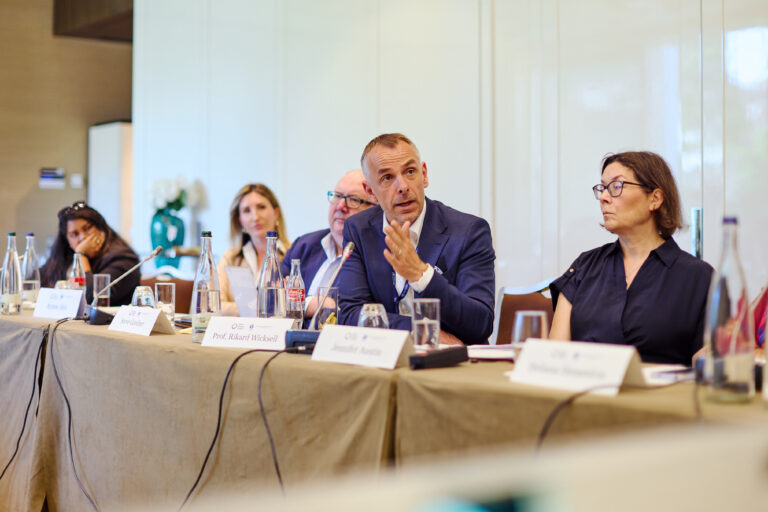
Alongside the 79th World Health Assembly in Geneva, the Global Remission Coalition and the Global Alliance for Musculoskeletal Health convened a roundtable of patients, clinicians and advocates from around the world to explore what it takes to reach remission in chronic inflammatory conditions — and how health systems can help patients get there sooner.
Timing is Everything
A consistent theme across the discussion was the cost of delay. In conditions like rheumatoid arthritis, the window for early intervention is narrow: the sooner treatment begins, the greater the chance of achieving remission and preserving function. Too often, patients wait well over a year to receive a diagnosis—partly because symptoms like joint pain are too easily dismissed or normalized. Participants agreed that raising awareness among both patients and clinicians is essential to closing that gap.
Chair of the Global Remission Coalition, Neil Betteridge, shares the value of early intervention in the pursuit of remission:
“For someone with a newly diagnosed chronic inflammatory condition, early intervention can be a game-changer. Evidence clearly shows that initiating treatment early is a ‘window of opportunity’ in pursuing remission. But far too often, patients are failed by health care systems which don’t respond early enough to the onset of such diseases. This can leave people struggling to cope with otherwise preventable pain and disability.”
Reducing Barriers to Early Care
Roundtable participants shared examples of creative approaches to getting patients effectively supported faster. Partnerships between specialists and primary care providers have expanded diagnostic reach in some underserved communities; While digital tools like symptom checkers are empowering patients to recognize warning signs and seek help earlier. And redesigning referral pathways so patients can access the right level of care without unnecessary delays has shown real results in a number of health systems represented at the table.
The discussion also underscored the importance of equity. Across geographies, marginalized and remote communities face the greatest barriers to early diagnosis and treatment. Co-designing solutions with those communities, rather than handing down standard approaches, was highlighted as critical to making progress.
Keeping Patients at the Center of their Care
Participants called for a broader definition of what success looks like in musculoskeletal and inflammatory conditions. Clinical markers matter, but so do pain, fatigue, independence and overall quality of life. Policies should support the full patient journey. As one participant noted, health systems become more effective when patients are genuinely engaged in their own care.
From primary care capacity to digital innovation to community-based models, the roundtable made clear that the tools to expand access to early intervention exist. What is needed now is the will to implement them consistently—and with patients at the center.
The Global Remission Coalition is committed to supporting that work. Visit globalremission.org to learn more and join forces in the pursuit of remission.
 papers
 news
news